

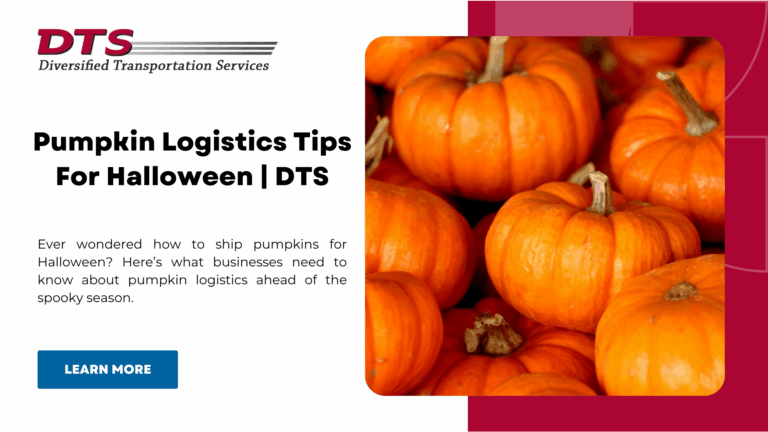
Like trick-or-treating, wearing fun costumes, and watching horror movies, pumpkins are a staple of Halloween. In fact, they’re so popular that the United States produced around 14.42 million cwt (hundredweight) of them in 2024 alone.
But before they can be carved into jack-o’-lanterns, pumpkins must be grown and shipped to stores and retailers. And pumpkin logistics can be a tricky task.
How do shippers make sure pumpkins arrive intact, ready to be carved, displayed, or eaten during the spooky season?
In this post, we’ll explain how to ship pumpkins safely and offer some expert tips to help you get it right.
Proper processing is a key part of pumpkin logistics in the US. Let’s explore how it works.
Pumpkins must be packed securely before shipping. Using the wrong packaging could cause serious problems during the pumpkin logistics process. This would waste time, money, and produce.
Here are some of the most important elements of proper pumpkin packaging:
Pumpkins must reach their destination in good condition, which means protecting them from damage during transit.
With this in mind, package pumpkins in strong bulk bins or corrugated cartons with padding. This will reduce the likelihood of bruising and other forms of damage.
Like any other perishable goods, pumpkins must be stored in a ventilated space. They need good airflow to avoid mold and premature decay.
In pumpkin shipping, stacking is vital to make the most of the space available. However, it’s essential to avoid overpacking them into containers, as this can restrict airflow and cause damage.
Always place heavier pumpkins on the bottom and store lighter ones on top. Sorting pumpkins by size before packaging them will help you stack efficiently.
Using a truck with temperature controls can provide the right environment for pumpkin shipping. Pumpkins keep best in cool, dry conditions with a temperature of 50 to 55°F.
Refrigerated trailers may not be the best option, because pumpkins will decay faster if kept too cold. But opting for vented van shipping can help protect pumpkins from heat during transit and keep them at the ideal temperature.
Careful labeling is a key part of knowing how to ship pumpkins. Add “fragile” and “perishable” designations to packaging to reduce the likelihood of rough handling. This will help pumpkins reach their end destination in one piece.
Pumpkin shipping comes with its own set of unique challenges, including:
Shipping pumpkins for Halloween demands careful planning. Understanding when pumpkins will be harvested, knowing how to package them properly, and using the right packaging and labels are key. Plus, you need to find carriers who know how to ship pumpkins on time and with care.
This can be a time-consuming and complex process to handle on your own. That’s why working with shipping professionals, like DTS, is a great idea. We have decades of experience in managing seasonal and specialty shipping for countless businesses.
To discuss your produce and food transportation needs or for a tailored pumpkin shipping quote, get in touch today.
Whether you're a company looking to improve one facet of your supply chain, your entire supply chain, or simply looking for a transportation and logistics consultation, we can help.

19829 Hamilton Avenue
Torrance, CA 90502